
NEW


Tr. cross “Oceanside 02” Cut
£44.95
Currently out of stock
This line is marked as likely to return. Check the product page options below or browse similar current stock.
Out of stock
Want to be notified when this product is back in stock?
I am stoked to finally be able to offer a cutting of this gorgeous cross. His full lineage is unknown but is most likely a bridge x peru cross.
- Trichocereus cross “Oceanside 02”
- 30cm Tip
- Cut to order, please allow for a few days drying time.
This is a great chance to get a highly sought after clone.

Locality
Trichocereus bridgesii is native to Bolivia, where it grows in the dry Andean valleys.History and Taxonomy
The species was originally published as Cereus bridgesii by German botanist Joseph zu Salm-Reifferscheidt-Dyck, usually cited as Salm-Dyck, in 1850. His original account records that English botanist and plant collector Thomas Bridges brought the plant from Bolivia in 1846. The name bridgesii was given in his honour. Britton and Rose transferred the species to the genus Trichocereus in 1920, creating the familiar name Trichocereus bridgesii. Following the later reclassification of Trichocereus into Echinopsis, the species became Echinopsis lageniformis. It could not be called Echinopsis bridgesii because that name had already been used for a different Bolivian cactus. Echinopsis lageniformis is the currently accepted botanical name, although Trichocereus bridgesii remains firmly established among growers and collectors, many of whom still refuse to bow to the great Echinopsis takeover!Synonyms
- Echinopsis lageniformis
- Bolivian Torch Cactus
- Cereus bridgesii var. lageniformis
- Trichocereus bridgesii var. lageniformis
- Wachuma Bolivia
- Achuma Bolivia
Synonyms
- Echinopsis peruviana
- Peruvian Torch cactus
- Wachuma
- San Pedro Macho
- Huachuma
- Trichocereus pachanoi f. peruvianus
- Trichocereus tacnaensis
| Weight | 0.5 kg |
|---|
Be the first to review “Tr. cross “Oceanside 02” Cut”
Steps For Rooting
Once the cut is received, place it around 1/2 inch to 1 inch in a pot of substrate. I use wooden kebab skewers to hold up the piece. Water lightly and you should start getting new root growth within a few weeks to a few months depending on conditions.
An alternative way would be to stick them in perlite and wait for them to root, once roots form you can re-pot.
All plants sold are strictly for garden / ornamental purposes, not for human consumption.
We are here to cultivate these beautiful plants and spread them as far as we can, nothing outside of growing (all things related to growing) will be tollerated.
You may also like…


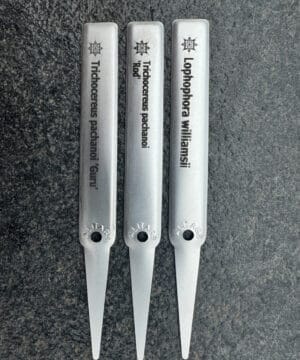

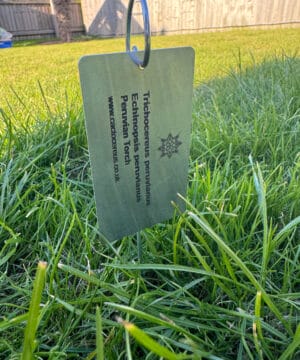


Accessories
(1)
Price range: £1.00 through £3.95
This product has multiple variants. The options may be chosen on the product page
Related products

Adult Plants
£29.95
This product has multiple variants. The options may be chosen on the product page

Seedlings
(1)
£4.95
This product has multiple variants. The options may be chosen on the product page

£150.00
This product has multiple variants. The options may be chosen on the product page


Reviews
There are no reviews yet.